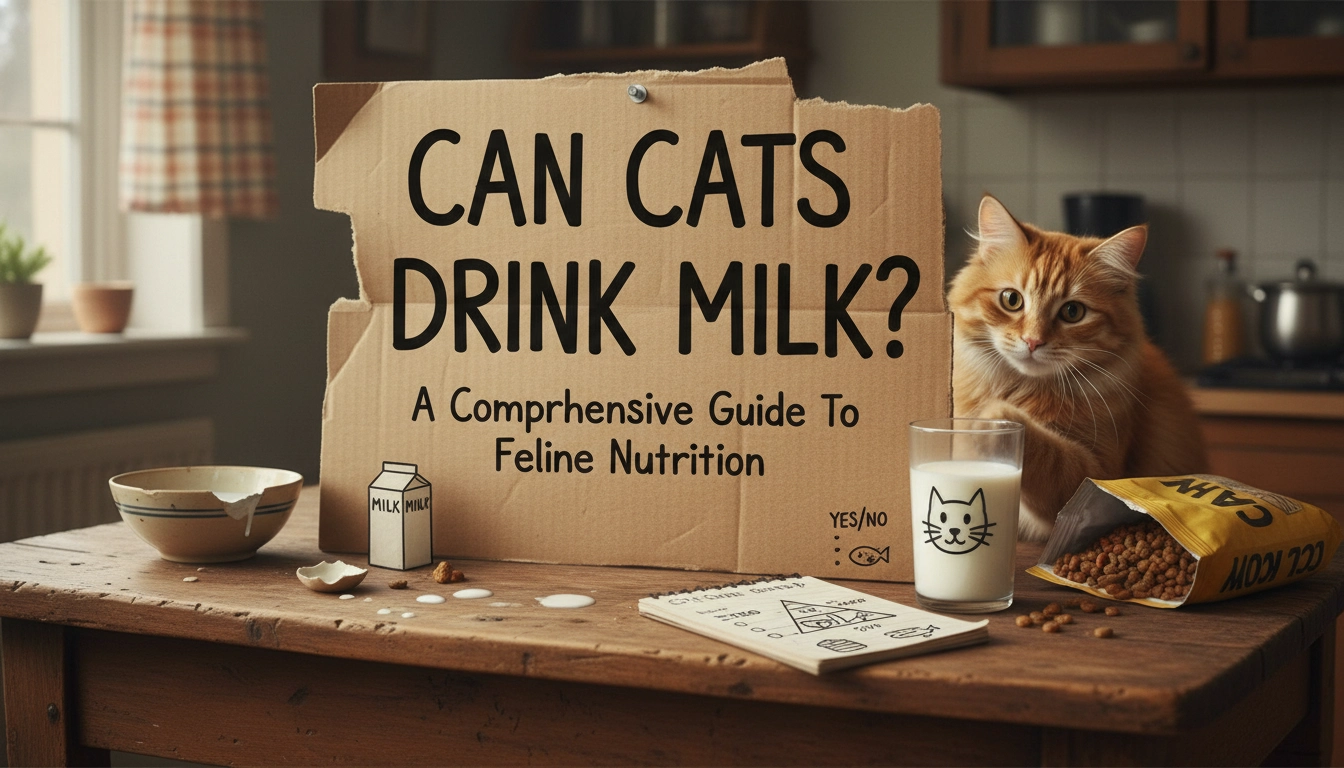

Honestly I am typing this so fast because Roy is literally staring at me from across the rug here on Hunters Creek Dr. The judgement is real because I will not let him lick the cereal bowl.
Humans seriously need to stop with the cow milk obsession. It is actually wild how many people think this is okay just because some old cartoon showed it once.
Your carpet will thank you if you just put the carton back in the fridge and listen for a second. I have seen the aftermath and it is not pretty.
I am an expert and I am telling you the white liquid is a trap for most of us. Quite frankly, I would rather have a high-end velvet cushion in a sunny patch than a stomach ache.
The image of a feline sitting by a saucer is a lie. It is a fairy tale concocted by people who probably also think we enjoy wearing tiny hats.
We do not. That vintage advertisement you saw in an antique shop? Fiction. Pure fiction. Most humans walk through life thinking they are doing us a favor by sharing their dairy. They are wrong.
Biology is a cold mistress and she does not care about your sentimentality. While Roy might look at the milk with a certain longing, his intestines are not prepared for the chemical warfare that follows.
Most of us are built for high-tier protein, not the stuff meant for a baby cow. If the staff—that is you, by the way—actually understood how our internal plumbing worked, they would stop trying to turn us into honorary calves.
We have standards. We have dignity. And yet, we are frequently subjected to the treat of dairy which is really just a ticket to the litter box of doom. It is about time we looked at the facts.
Understanding Feline Biology and Dairy
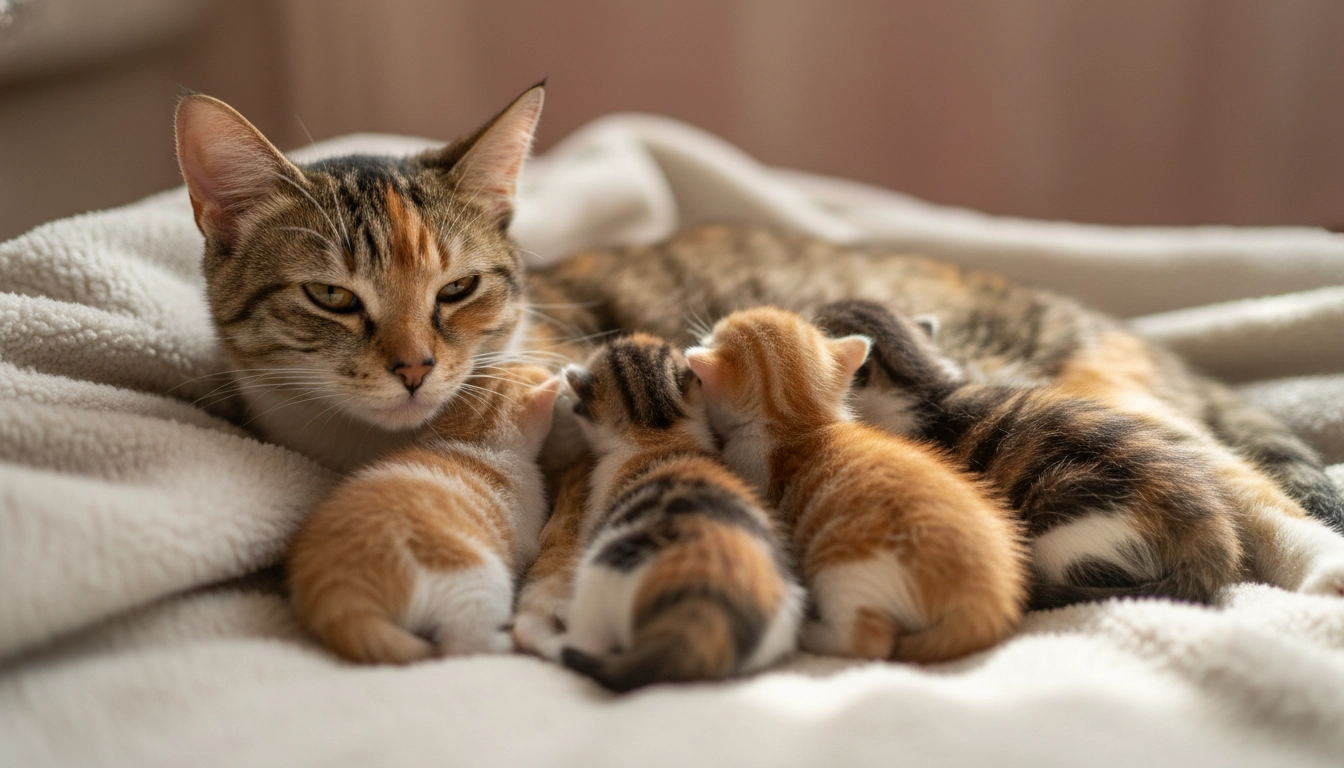
Milk is a liquid designed for the very beginning of a journey. It is a starter fuel. Mothers produce it to make sure the small versions of us do not wither away before we can hunt.
It is packed with specific sugars and fats that are great for a three-week-old. But life moves fast. We grow up. For a young feline, this maternal liquid is the gold standard.
It contains lactose. Lactose is a sugar that requires a very specific key to unlock it. That key is an enzyme. Without the key, the door stays shut and the sugar just sits there.
In those first few weeks, our bodies are overflowing with that enzyme. We are efficient. We are growing. But this is a fleeting moment in time.
Nature never intended for an adult to keep drinking this stuff, especially not from a completely different species. It is a biological dead end.
The Weaning Window
Kittens begin losing the ability to digest milk sugars as early as four weeks of age, coinciding with their transition to solid proteins.
I put together a little breakdown of how our bodies basically give up on dairy as we get older so you can see the decline for yourself.
| Life Stage | Lactase Enzyme Level | Primary Fuel Source |
|---|---|---|
| Newborn Kitten | Very High | Mother’s Milk |
| Weaning (4 to 8 weeks) | Rapidly Dropping | Meat and Milk Mix |
| Adult Feline | Trace Amounts | High Protein Meat |
My Take
We are built to hunt birds, not raid the dairy aisle. Once we stop nursing, the enzyme factory effectively shuts down for good.
Once the transition to solid meat happens, the internal machinery shifts. The biological need for dairy just evaporates.
In a natural setting, you would never see a grown cat chasing down a cow for a drink. The idea is ridiculous. Your human desire to share is often just a lack of education.
It ignores the reality of how we change. We are predators. We are not scavengers of the dairy aisle.
If you want to show affection, try upgrading that scratchy rug Roy has to sleep on. The decor in this house is questionable at best.
Can Cats Drink Milk ? The Truth About Feline Digestion
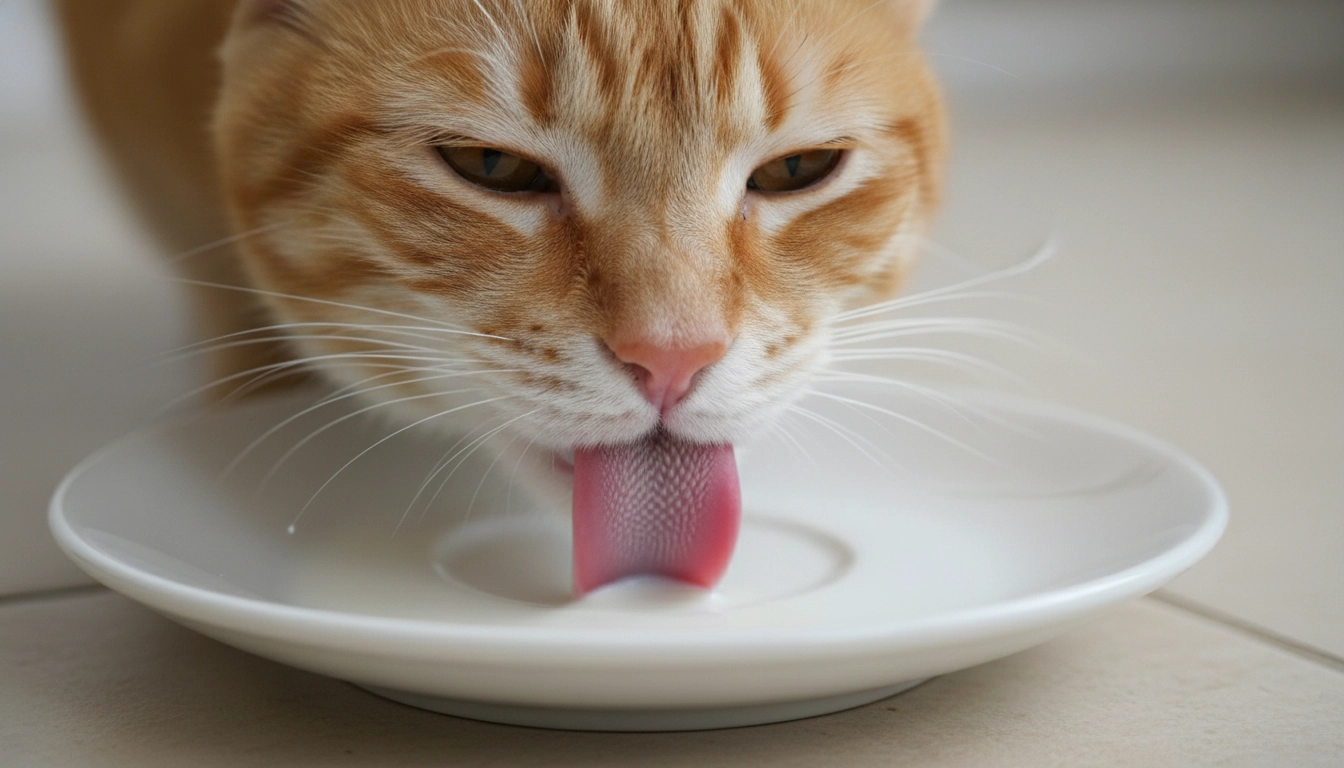
The answer is a hard no for most of us. Can we drink it? Technically, yes, we can swallow it. Should we? Absolutely not.
While a tiny fraction of the population might get away with it, they are the statistical outliers. They are the lucky ones.
For everyone else, dairy is a recipe for a very long night. Humans see us lick the bowl and think we are happy. We are opportunistic.
We see fat. We see protein. We want it. But our taste buds are writing checks that our colons cannot cash.
The Fat Trap
Even if a cat is not lactose intolerant, the high fat content in dairy can lead to weight gain and pancreatitis.
Do not confuse want with need. I might want to spend fourteen hours straight batting at a piece of loose wallpaper, but my body needs a premium nap spot.
Roy might want that cream, but he does not want the cramps. The high fat content is highly palatable, which is just a fancy way of saying it tastes like luxury. But luxury should not hurt.
Why Most Cats Are Lactose Intolerant
It comes down to chemistry. Specifically, lactase. This is the enzyme I mentioned. It breaks lactose down so it can enter the blood.
As we age, we hit a wall called lactase non-persistence. This is a very polite way of saying our bodies stop making the enzyme because they think we are done with milk forever.
Evolution assumes we are not going to be living with humans who have refrigerators. By the time we are adults, we are functionally incapable of handling dairy.
- Lactase production is at its highest during the first twenty-one days.
- It falls off a cliff once we start eating real food.
- We lack the genetic mutation that lets some humans drink lattes without exploding.
When that undigested lactose hits the large intestine, it sits there. It ferments. It pulls in water. It creates gas. It is a biological mess.
It does not matter how much you love us; you cannot change our enzymes.
What Happens If Cats Drink Milk?
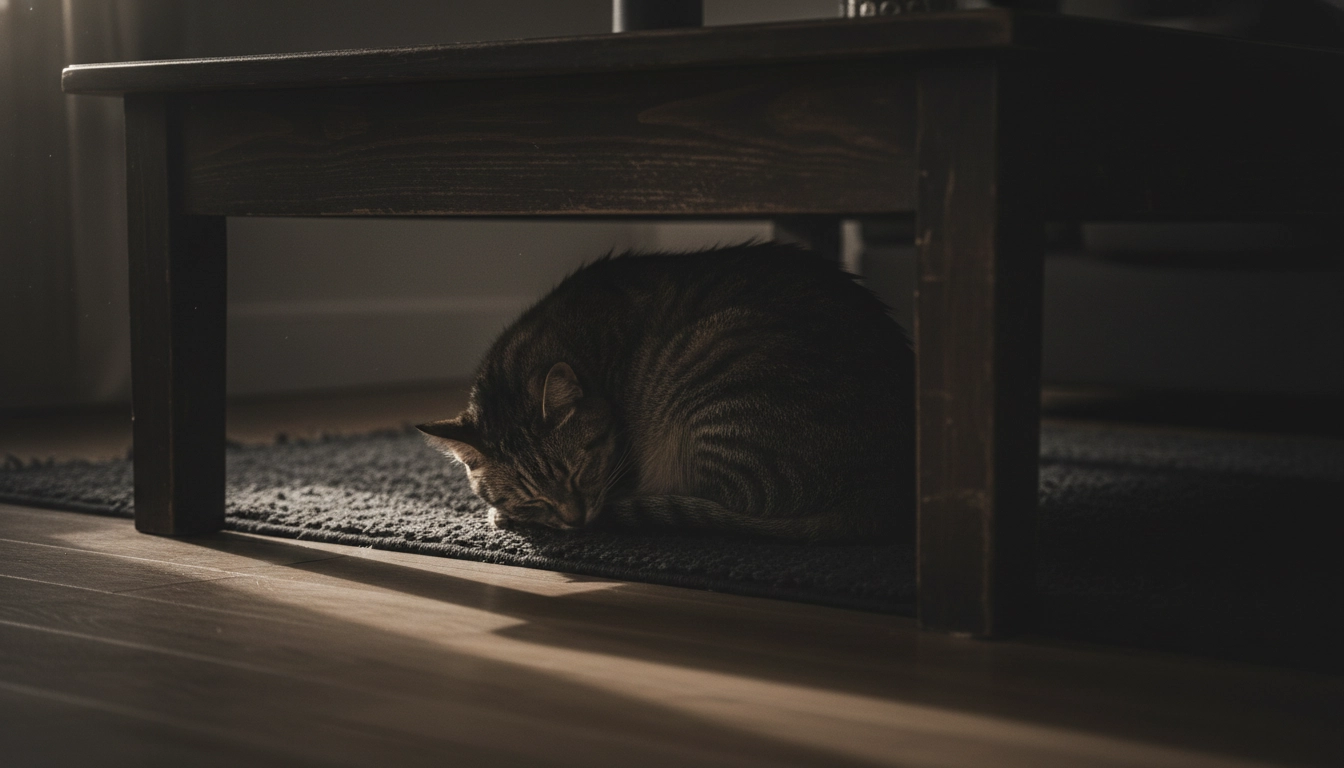
If a feline gets into the dairy, you usually find out about eight hours later. The first sign is not the mess. It is the mood.
We might stop sitting in our favorite spot. We might look a bit bloated. You might hear the gurgling. It sounds like a tiny, angry engine in our midsection.
The main event is usually diarrhea. It is not pleasant. Because the sugar pulls water into the colon, everything becomes liquid.
This is a massive loss of dignity. It is also a massive mess for you to clean up.
Symptom Tracking
If your cat accidentally consumes dairy, monitor their litter box habits for the next twenty-four hours to check for digestive distress.
Abdominal pain is real. We are private. We do not want you to see us hurting. We will hide. We will act strange.
The flatulence alone is enough to clear a room. It is a stressful experience for everyone involved. In the worst cases, we might vomit.
This is the body’s emergency exit. It leads to dehydration. In a small animal, dehydration is the number one concern.
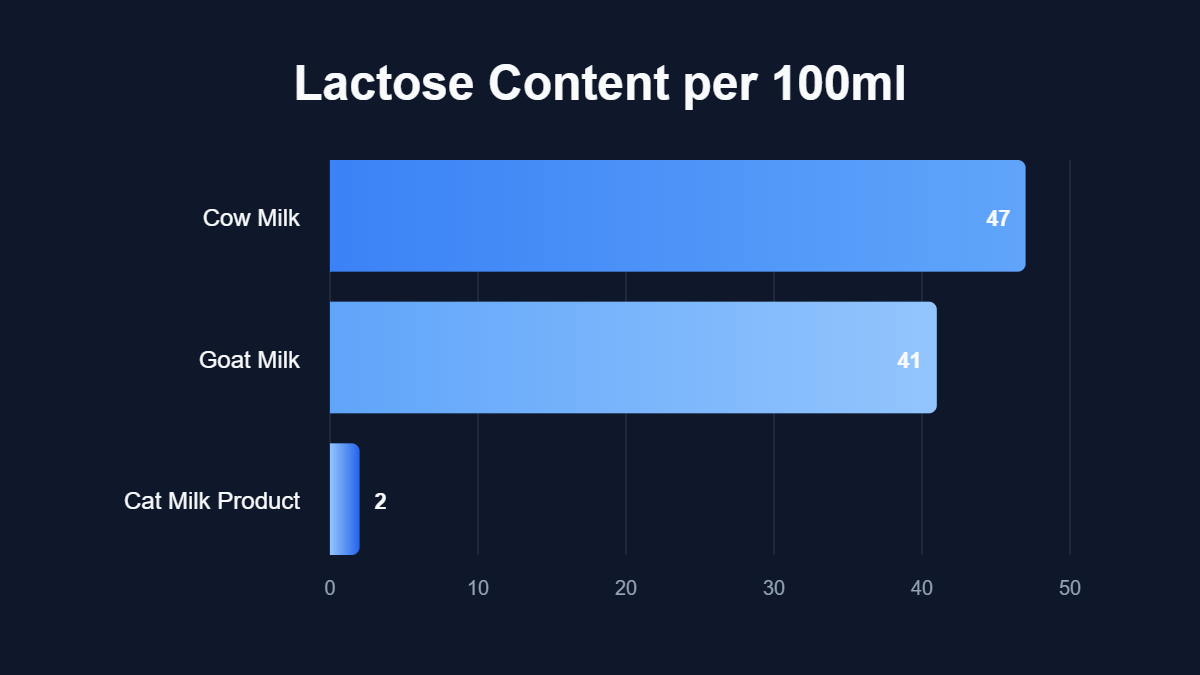
It can turn a small mistake into a medical emergency very quickly. If you are wondering why cow milk is the worst offender, look at these numbers compared to what we can actually handle.
My Take
Cow milk is basically a sugar bomb for our systems. The commercial cat milk is the only one that does not make my stomach do flips.
Are There Safe Milk Alternatives for Cats?
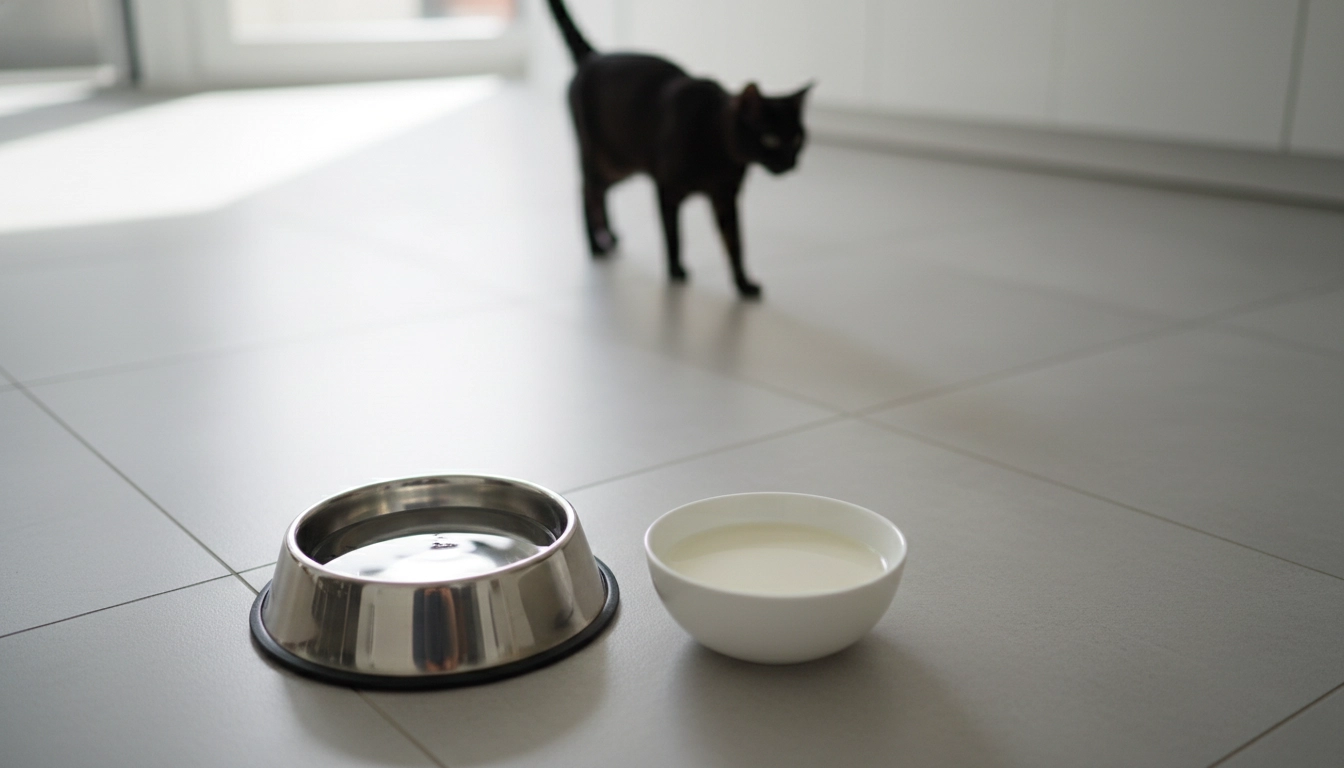
If you absolutely must give us a liquid treat, there are ways to do it without the chaos. Lactose-free milk for felines is a thing.
You can buy it at shops. They have already done the work of breaking down the sugars. It lets us have the taste without the disaster.
Goat milk is a bit of a trend. People like it. It has less lactose and the fats are smaller. It is easier to deal with, but it is still risky.
It should be a rare thing. A very rare thing.
- Only use unsweetened versions.
- Sugar is not our friend.
- Stay away from almond or soy stuff.
- They have weird thickeners.
- Our bodies do not know what to do with a bean.
- Make sure it is room temperature.
- Cold liquids are a shock to the system.
These things are supplemental. They are not dinner. We need water. Fresh, clean water in a bowl that does not touch our whiskers. That is the real luxury.
When Is Milk Okay as an Occasional Treat?
Maybe, just maybe, if your cat is one of the few with lactase persistence, a tiny bit of heavy cream will not cause a riot.
But we are talking a teaspoon. Not a bowl. This should never be more than ten percent of what we eat in a day.
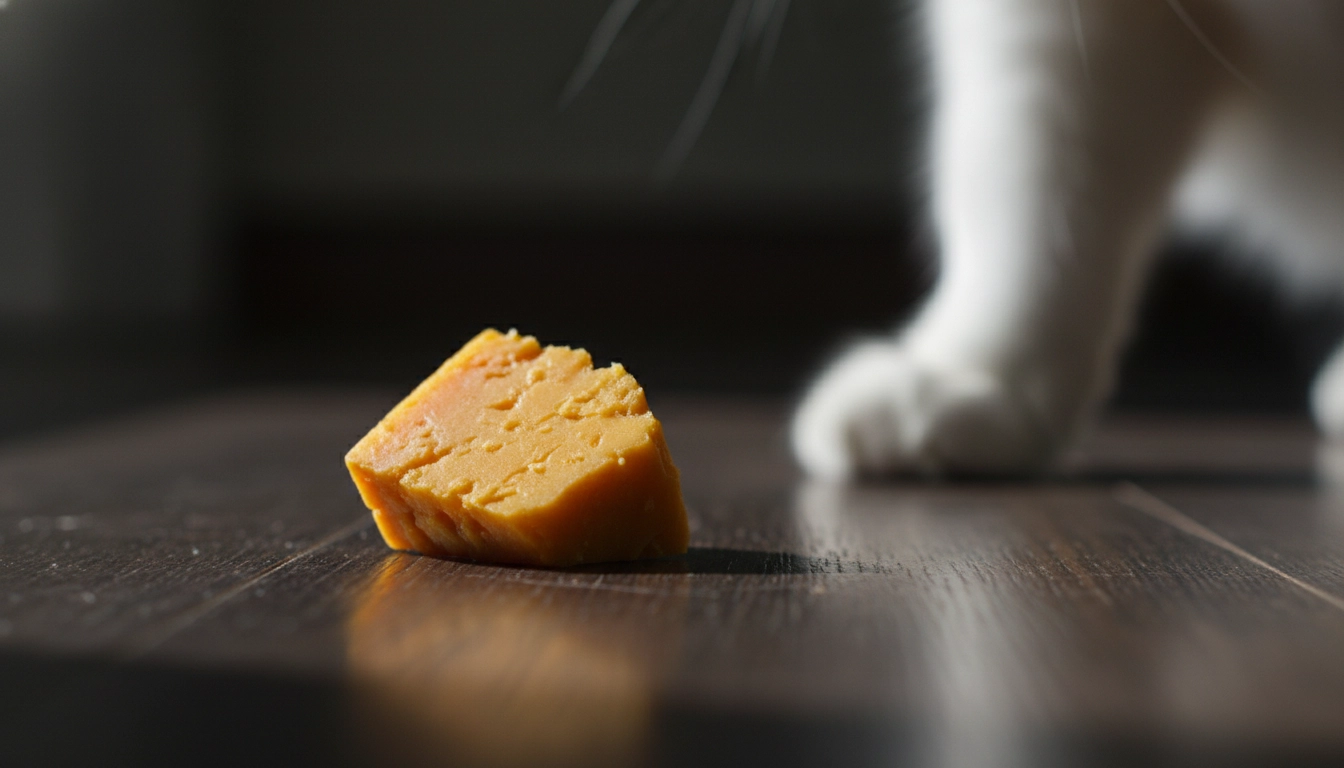
We do not want to get round. Being sleek is part of the job description. Hard cheeses are actually a better bet.
Cheddar. Parmesan. The process of making cheese gets rid of a lot of the lactose. It leaves the fat and protein behind.
If you are eating a snack and want to share, a tiny crumb of aged cheese is the smart move. It hits the flavor profile we want with less risk of the gurgles.
The Yogurt Exception
Plain, unsweetened yogurt contains active cultures that may help break down some of its own lactose, making it easier on the stomach.
I have ranked these dairy items so you stop guessing while Roy is staring at your plate.
| Dairy Item | Lactose Level | Risk Factor | Verdict |
|---|---|---|---|
| Whole Milk | High | Very High | Avoid entirely |
| Heavy Cream | Medium | High Fat | Teaspoon only |
| Aged Cheddar | Very Low | Low | Safe crumb |
| Plain Yogurt | Low | Moderate | Occasional lick |
My Take
Stick to the hard stuff if you must share. The older the cheese, the less likely I am to have an accident on your favorite rug.
Moderation is everything. We will stare at you. We will make you feel like we are starving. We are experts at this.
Do not buckle. Your job is to keep us healthy, not to satisfy every whim. A strict diet means a longer life.
That means more time for us to judge your furniture choices.
The History of the Milk Myth
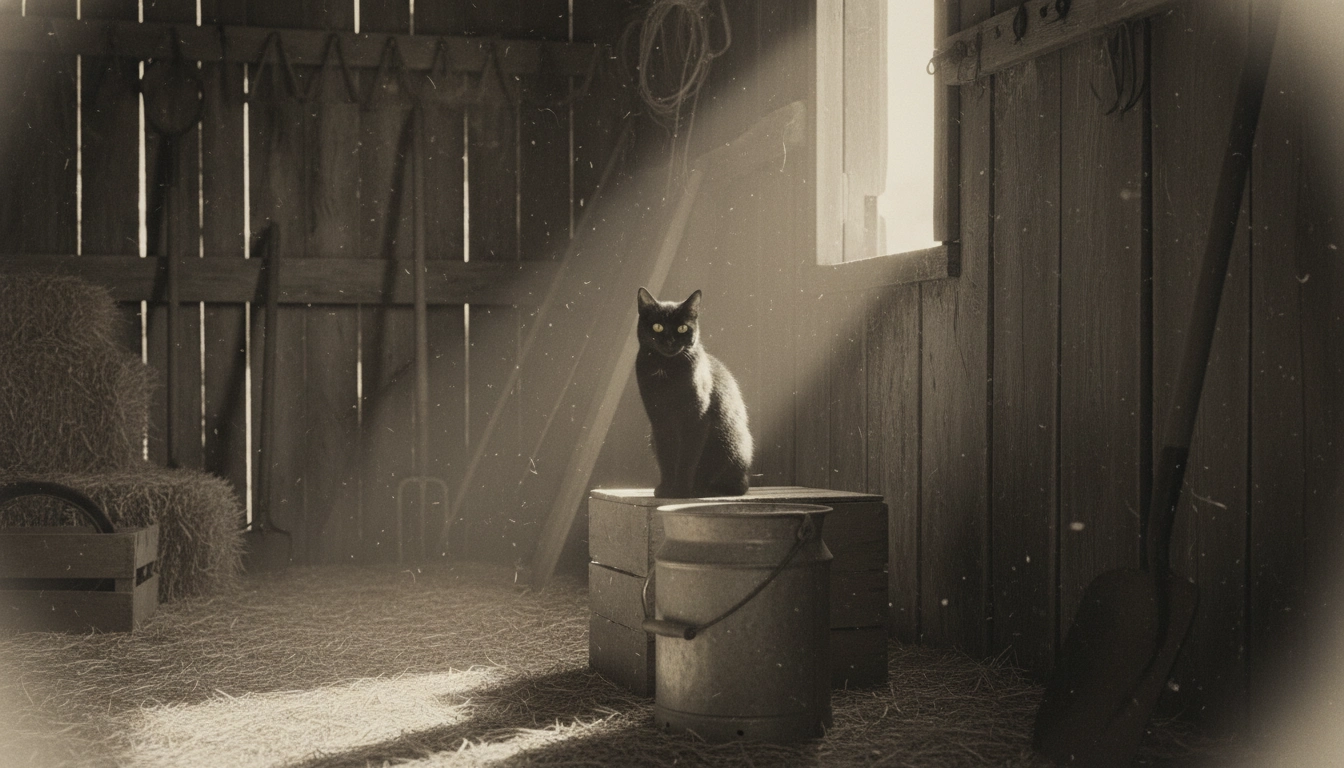
Why do you all think we love milk so much? It started on farms. Back then, cats were there to work.
Farmers had too much milk. They would give the top of the bucket to the barn cats. Those cats were burning thousands of calories hunting.
Their lives were different. Also, raw farm milk is not the same as the processed stuff in your fridge.
But even those farm cats probably had issues. Nobody was checking their litter boxes in 1920.
The myth got stuck in books and movies. It became a cultural icon. People love the image.
But the science moved on. We know better now. Or at least, we should.
Conclusion
The idea that we need dairy is a massive fallacy. The saucer of milk is a lie.
The biological truth of can cats drink milk ? is pretty simple: we should not. It is a path to a bad stomach and a grumpy cat.
If you love us, provide the right food. Give us high-quality protein. Give us water.
If you really want to spoil us, buy a new toy that looks like a bird or find a spot where the sun hits the floor just right.
We value the stability you provide. We value the dairy-free life. By understanding our bodies, you make our lives better. And is that not why we let you stay here?