Training a puppy at home is one of the most important responsibilities for new dog owners. A well-trained puppy grows into a happy, confident, and well-behaved dog. With the right methods, patience, and consistency, anyone can successfully train their puppy without professional help.
This dogs training guide PetlyInfo will walk you through the essential steps to train your puppy at home. Whether you have just adopted a new puppy or want to improve your dog’s behavior, this guide will help you build a strong bond while teaching your puppy the right habits.
Why Puppy Training Is Important
Training your puppy early helps prevent behavioral problems and makes daily life easier for both you and your dog.
Benefits of training your puppy include:
-
- Teaching good behavior at an early age
-
- Strengthening the bond between you and your dog
-
- Improving communication with your pet
-
- Preventing destructive habits such as chewing furniture
-
- Helping your puppy feel safe and confident
Following a structured dogs training guide PetlyInfo ensures that your puppy learns positive behaviors from the beginning.
When Should You Start Training a Puppy?
The best time to begin training is when your puppy is 8 to 12 weeks old. At this age, puppies are curious and eager to learn.
However, even older puppies can still learn new skills. The key is to start with simple commands and gradually build up to more advanced training.
Early training helps your puppy learn:
-
- Basic commands
-
- House rules
-
- Social behavior
-
- Proper interaction with people and other pets
Step-by-Step Guide to Training a Puppy at Home
Step 1: Create a Training Routine
Dogs learn best through consistency. Set a regular training schedule every day.
A good routine includes:
-
- Short sessions (5–10 minutes)
-
- Training after playtime
-
- Training before meals
-
- Repeating commands daily
Short and frequent sessions keep your puppy engaged and prevent boredom.
Step 2: Start With Basic Commands
Every puppy should learn a few basic commands first.
Common beginner commands include:
-
- Sit
-
- Stay
-
- Come
-
- Down
-
- Leave it
Start with one command at a time. Use a calm voice and repeat the command clearly.
Example:
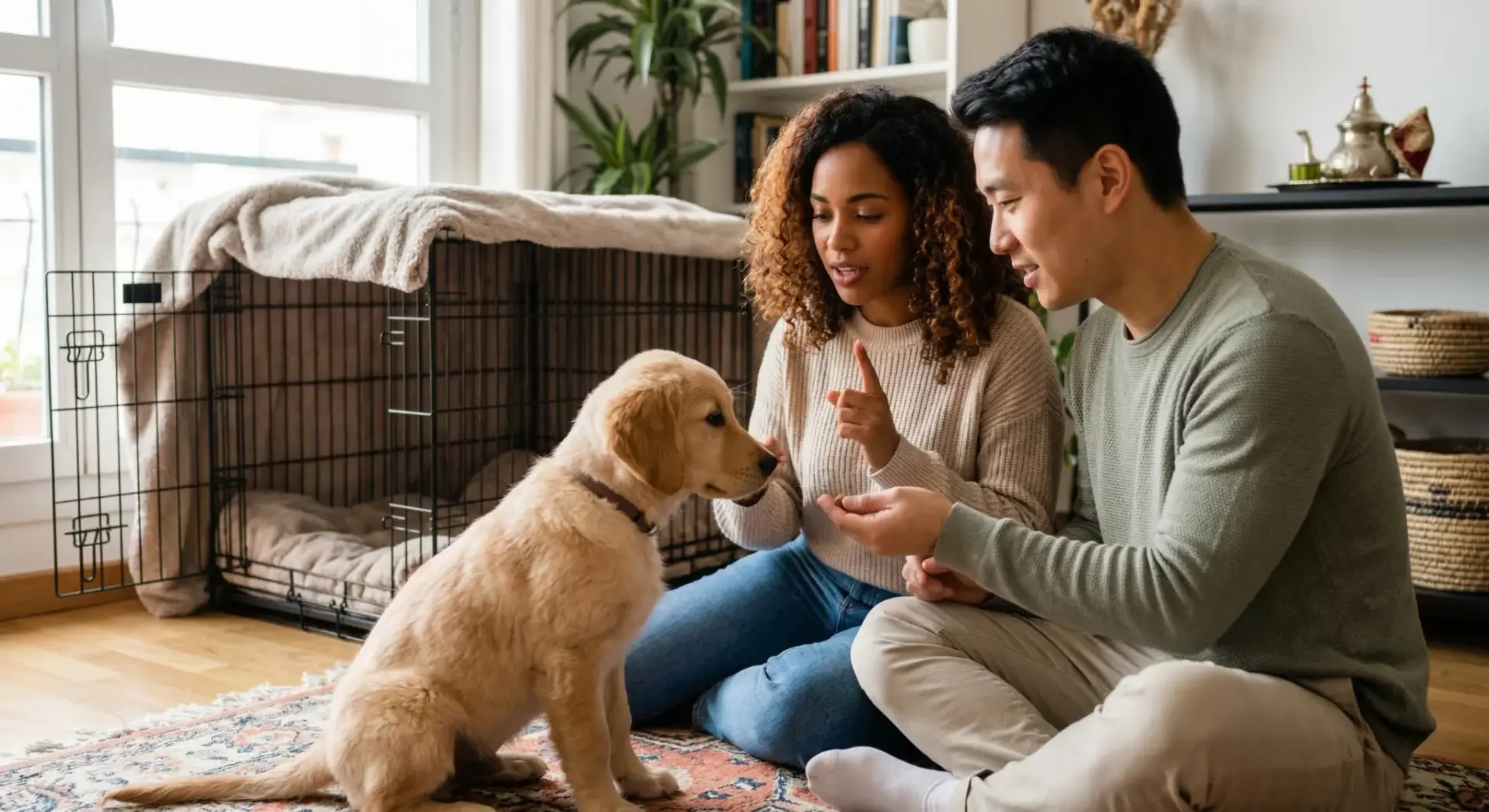
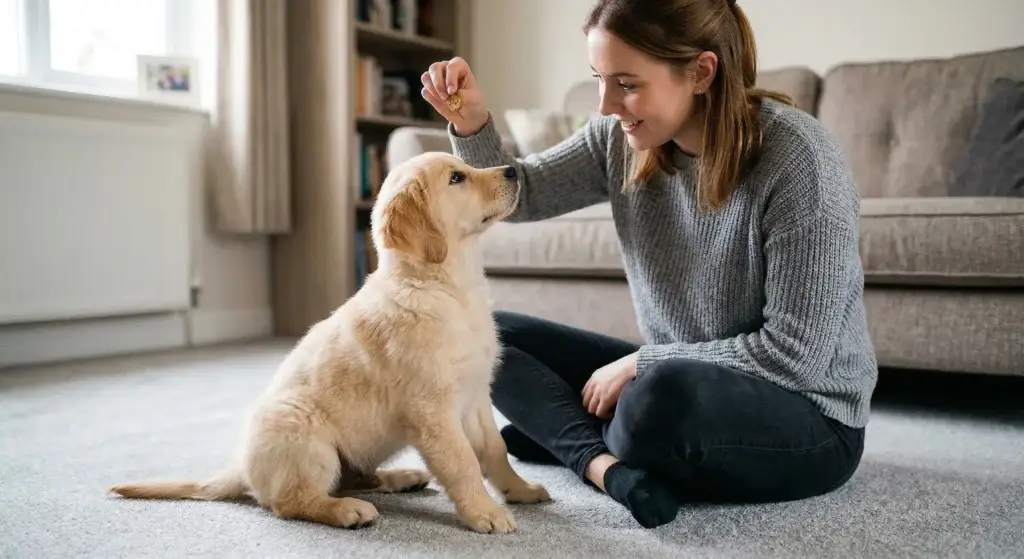
Hold a treat above your puppy’s head and say “Sit.” When the puppy sits, reward them immediately.
Step 3: Use Positive Reinforcement
Positive reinforcement is the most effective training method.
Reward your puppy with:
-
- Treats
-
- Praise
-
- Toys
-
- Gentle petting
Your puppy will associate good behavior with rewards and will want to repeat it.
Avoid punishment, as it can confuse or scare your dog.
Step 4: Practice Potty Training
House training is one of the first things every puppy must learn.
Tips for successful potty training:
-
- Take your puppy outside every 2–3 hours
-
- Take them outside after eating or drinking
-
- Praise them when they go outside
-
- Keep a consistent schedule
Accidents will happen, but patience is essential.
Step 5: Socialize Your Puppy
Socialization helps your puppy feel comfortable in different environments.
Introduce your puppy to:
-
- New people
-
- Other dogs
-
- Different sounds
-
- Various places
A well-socialized puppy grows into a confident adult dog.
Helpful Tips for Pet Owners
Training takes time, but the right approach makes it easier.
Useful tips from the dogs training guide PetlyInfo include:
-
- Be patient with your puppy
-
- Keep training sessions short
-
- Always reward good behavior
-
- Avoid shouting or punishment
-
- Stay consistent with commands
Remember that every puppy learns at a different pace.
Common Mistakes to Avoid
Many pet owners accidentally make mistakes during training. Avoid these common errors:
1. Inconsistent Commands
Using different words for the same command confuses your puppy.
2. Long Training Sessions
Puppies have short attention spans. Keep sessions short.
3. Punishing the Puppy
Punishment can damage trust between you and your dog.
4. Expecting Fast Results
Training takes time. Be patient and consistent.
5. Ignoring Good Behavior
Always reward positive behavior to encourage learning.
Following a structured dogs training guide PetlyInfo helps you avoid these mistakes.
Benefits of Training Your Puppy
Training offers many advantages for both the dog and the owner.
Benefits include:
-
- Better behavior at home
-
- Stronger bond between pet and owner
-
- Increased safety for your dog
-
- Reduced stress for both you and your pet
-
- Easier vet visits and grooming
A trained puppy grows into a well-adjusted dog that fits perfectly into family life.
FAQ – Puppy Training
1. How long does it take to train a puppy?
Basic training usually takes 4 to 6 weeks, depending on the puppy’s breed, age, and consistency of training.
2. What is the easiest command to teach a puppy?
The “Sit” command is usually the easiest and most common command to start with.
3. How many times per day should I train my puppy?
Short sessions 2–3 times per day are ideal for effective learning.
4. Should I use treats for puppy training?
Yes, treats are a powerful reward tool that encourages positive behavior.
5. Can older puppies still be trained?
Yes. Dogs can learn at any age, but early training makes the process easier.