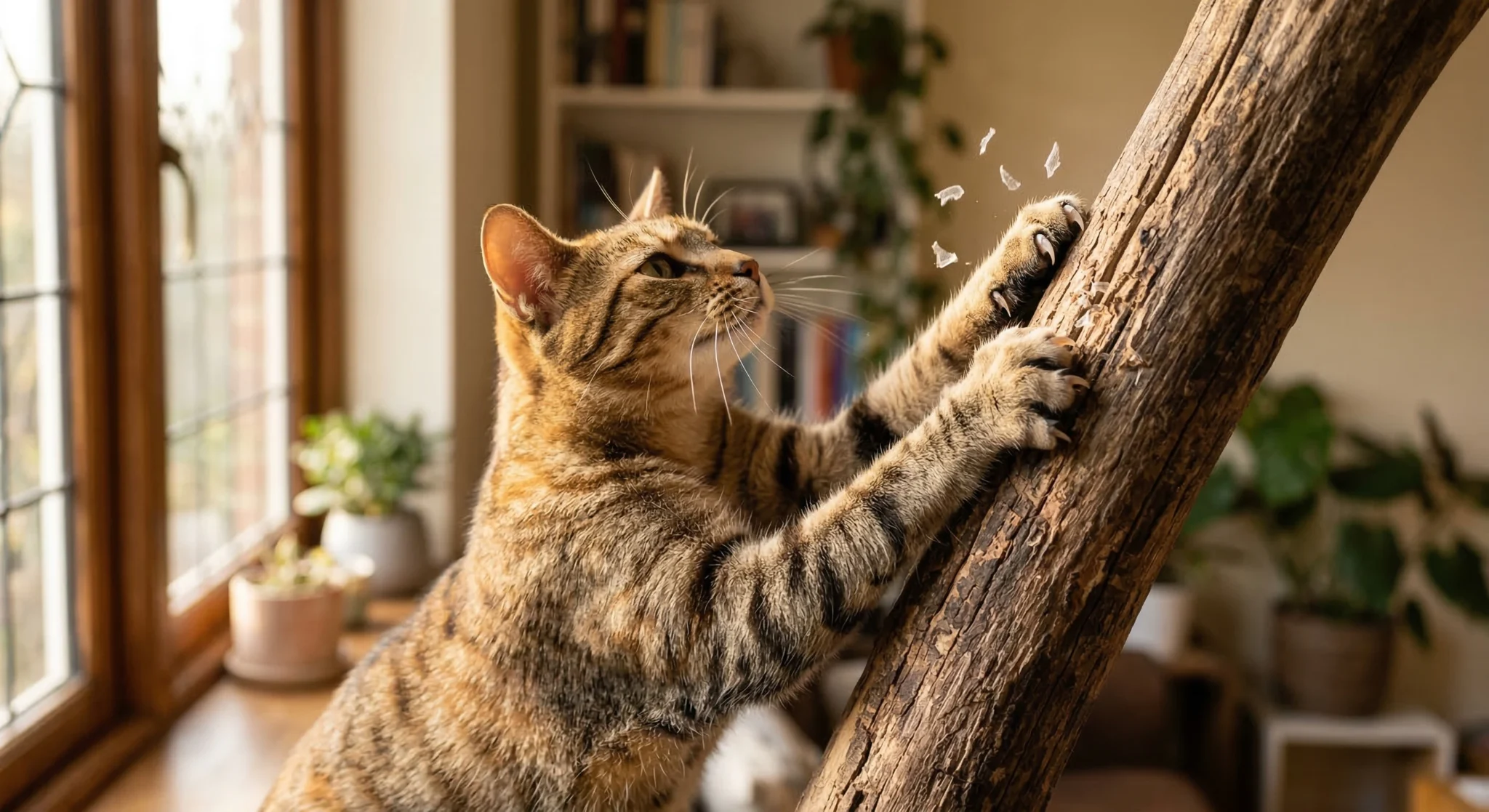

It’s a scene every cat owner knows: you come home to find your favorite armchair looking a bit “distressed.” While it might feel like a personal attack on your interior design, cat scratching behavior is a completely natural and vital part of being a feline. To a cat, claws aren’t just tools; they are essential for safety, communication, and physical health. By understanding why they do it, you can redirect their energy and keep your home intact.
Why Do Cats Scratch?
Before we talk about solutions, we have to understand the “why.” A cat’s claws are their primary defense mechanism. In the wild, a cat’s first instinct when in danger is to climb a tree or defend themselves, both of which require sharp, reliable claws.
Beyond protection, scratching serves several biological purposes:
- Maintenance: It helps shed the outer layers of the claw to keep them sharp and healthy.
- Marking Territory: Cats have scent glands in their paws (and face). Scratching leaves both a visual and a scent mark to claim an area.
- Stretching: Scratching allows a cat to fully extend their muscles and spine, which is the feline equivalent of a deep yoga stretch.
How to Manage Cat Scratching Behavior at Home
The goal isn’t to stop the scratching—it’s to change where it happens. You can’t fight nature, but you can certainly guide it toward a better target.
Choosing the Right Scratching Post
Not all posts are created equal. If the post is flimsy, your cat will go straight back to the sturdy sofa.
- Height Matters: The post must be tall enough for a full stretch (at least 1 meter).
- Stability: It must be heavy enough that it won’t wobble or fall over during use.
- Placement: Initially, place the post near their bed or food, or right next to the furniture they currently prefer.
Making the Post Irresistible
To encourage your cat to use the new post, try these expert tricks:
- Scent it: Rub a little catnip around the base and middle of the post.
- Make it Fun: Hang toys from the top or place high-value treats (like liver treats) on the upper platform.
- Demonstrate: Gently rub your kitten’s paws on the post to show them the texture.
What to Do if Your Cat Scratches the Furniture
If your cat is already targeting the couch, don’t panic. You can win this battle by making the furniture “boring” and the post “exciting.”
The “Switch and Deter” Method
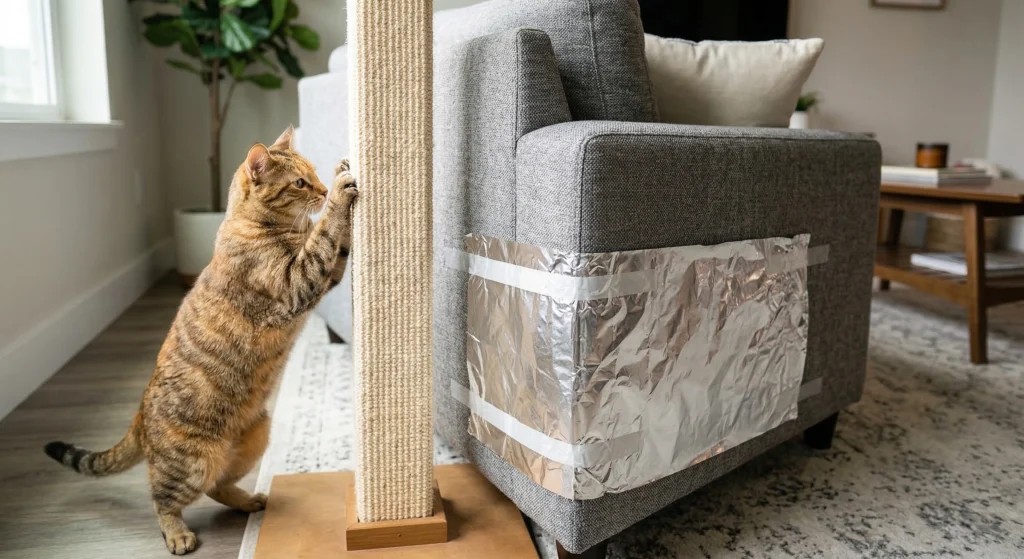
Move the scratching post directly in front of the area they are currently damaging. Once they are consistently using the post instead of the couch, you can slowly migrate the post back to your preferred location.
To make the furniture unappealing in the meantime, cover the target area with:
- Aluminum Foil: Cats dislike the sound and texture.
- Double-sided Tape: The sticky sensation is a major deterrent for feline paws.
- Bubble Wrap: The unexpected pop and feel are usually enough to discourage a repeat performance.
Should You Trim Your Cat’s Nails?
A common question regarding cat scratching behavior is whether a manicure is the answer. The answer depends entirely on your cat’s lifestyle.
- Indoor Cats: Yes, you can trim their nails. It reduces the damage to furniture and prevents claws from getting snagged on carpets. Visit your vet practice to purchase specialized clippers and get a quick demonstration.
- Outdoor Cats: No. It is not advisable to trim the nails of an outdoor cat. They need their claws for climbing to safety and protecting themselves from predators.
FAQ: Litter Trays and Basic Needs
What size should a litter tray be? The tray should be 1.5 times the length of your cat (from nose to base of tail) to ensure they have enough room to turn around and dig comfortably.
What type of litter is best? Most cats prefer a fine-grained, unscented clumping litter because it feels more natural on their paws, but every cat is an individual. If they are using the tray consistently, don’t change the brand!
Can I stop my cat from scratching entirely? No, and you shouldn’t try. Scratching is a fundamental feline instinct. Your goal should always be redirection, not elimination.
Summary and Expert Advice
Managing cat scratching behavior requires patience and the right tools. Remember:
- Provide a sturdy, 1-meter-tall scratching post.
- Use catnip and treats to encourage use.
- Use deterrents like foil on furniture temporarily.
- Only trim nails if your cat stays 100% indoors.