

Most people bring a new cat home and immediately start acting like a stage-five clinger, which is exactly why the cat ends up living behind the toilet for a month. It is annoying, I know.
You spent all this money on a fancy tree and organic kibble, and the cat treats you like a serial killer. My buddy Maurice was going through this exact thing out at his place on Saddle Dr in Busselton.
He called me sounding like he had failed some kind of test because the cat hissed when he tried to pet it. I told him he needs to chill out. It is not about you.
It is about the cat brain chemistry screaming danger at every shadow. I put together this quick breakdown of the timeline so you can see exactly how the phases of decompression actually play out over time.
| Phase | What The Cat Feels | What You Should Do |
|---|---|---|
| Three Days | Total terror and sensory overload | Give them space and leave them alone |
| Three Weeks | Starting to feel safe and curious | Establish a rock solid routine |
| Three Months | Full trust and true personality | Enjoy your new family member |
My Take
Don’t rush the process because every cat has a different internal clock based on their past experiences and unique personality.
When people ask me, What Is the 3-3-3 Rule for Cats? they are usually looking for a magic wand. They want a button to press that makes the cat sit on their lap and purr while they watch TV.
But that is not how animals work. This rule is more of a roadmap. It is a way to track the mess of emotions your cat is going through.
We are looking at three days of pure terror, three weeks of okay, maybe I won’t die today, and three months of this is my house now. It is about letting the dust settle.
You have to realize that for a cat, moving house is like being abducted by aliens. Everything they knew—the smells, the corners, the safe spots—is gone.
They do not know you are the good guy. They just see a giant primate staring at them. That is why we use this timeline.
It gives you permission to stop trying so hard. It reminds you that Patience is the only thing that actually works here. If you cannot give them time, you are going to struggle.
Understanding What Is the 3-3-3 Rule for Cats?

The biology of this is pretty straightforward. It is all about cortisol. That is the stress hormone that keeps us alive when things get hairy.
For a rescue cat, their cortisol levels are through the roof. They are in a state of high alert.
This framework is not some rigid law of physics, but it is a very solid observation of how these little guys process change. I have seen it a hundred times.
You need to lower your expectations. Seriously. Drop them.
If the cat does not come out for two days, that is not a failure. That is just a cat being a cat.
They are territorial creatures. Their sense of safety is tied to the ground they stand on. When you take them out of a shelter and drop them in your living room, their entire reality has collapsed.
It is heavy stuff for a ten-pound animal. Most of the time, we overcomplicate things.
We try to buy their love with treats or toys. But what they really need is space.
They need to know that you are not going to grab them or chase them. This rule helps you understand that the cat is decompressing. It is a slow bleed of stress.
Species Specifics
While I spent years mastering canine behavior, I found that cats and dogs share the same basic need for a predictable environment during transitions.
The First Three Days: Initial Decompression

The first seventy-two hours are usually a bit of a nightmare for the owner. You see your new friend huddled behind the washing machine or tucked so far under the bed you can only see their glowing eyes.
It is hard to watch. You want to help. But the best way to help is to leave them alone.
This is the sensory overload phase. Every sound is a threat.
The fridge humming? Scary. The floor creaking? Terrifying.
You sneezing in the other room? That is basically an explosion to them.
They are not looking for cuddles. They are looking for an exit. Or a dark hole.
Their brain is stuck in fight or flight mode. Usually flight.
Maurice, that client I mentioned, he kept trying to pull the cat out from behind his dryer. I told him, Man, you are acting like a predator.
If you force the interaction, you are just proving their fears are right. You are the big scary thing that grabs them. Don’t do that.
Providing a Safe Haven
You need to give them a sanctuary. A small room is better than a whole house. It is less to worry about.
If they pick a spot under a dusty cabinet, let them have it. Don’t move the cabinet.
Don’t poke them with a broom to see if they are okay. Respecting their physical boundaries is how you actually start a bond.
Your only job right now is the basics. Food. Water. Litter. That is it.
Keep the litter box close to where they are hiding. If they have to walk across a giant, open living room to pee, they probably will not do it.
They will just hold it or go behind the couch. Open spaces feel like a trap to a scared cat.
Think about it from their perspective. They are small. Everything else is big.
By keeping their resources nearby, you are telling them, Hey, you can survive here without being hunted. It is basic survival stuff.
Minimizing Stress Signals
When you do have to go in the room, do not walk straight at them. That is what a hunter does. Walk in sideways.
Look at the wall. Talk to yourself in a low, quiet voice.
I usually tell people to just read a book out loud. It gets the cat used to your voice without the pressure of a conversation.
Avoid Eye Contact
Staring directly at a stressed cat can be seen as a challenge or a threat. Always use the ‘slow blink’ to communicate your peaceful intentions.
Consistency is what wins the game here. If you show up at the same time every morning with food, you become predictable.
And predictable is safe. You are not trying to be their best friend yet.
You are just trying to be a boring, non-threatening part of the furniture.
The First Three Weeks: Settling Into a Routine

After about three days, something shifts. It is subtle.
You might see them sitting on a chair instead of under it. Or maybe they do not bolt for the door when you walk in.
This is when they start mapping the place. They are figuring out where the sun hits the floor and where the dog is not allowed to go.
This is the phase of testing boundaries. They will start rubbing their faces on things.
That is scent-marking. It is like they are putting their name on the mailbox.
It makes them feel like they own the place. The more of their smell they can get around the house, the lower their anxiety goes.
I always tell people to watch for these small signs. It is not about big leaps; it is about those tiny moments of curiosity.
They are starting to believe that maybe, just maybe, this house is okay.
Establishing Predictability
This is where you really double down on the schedule. Animals love a clock.
If breakfast is at 7 AM, make sure it is at 7 AM. When their world is predictable, they can stop worrying about where their next meal is coming from.
Once that worry is gone, their brain has room for social stuff. They might start watching you from across the room.
They are studying you. They want to see how you react to things. It is a huge step toward integration.
Scent Swapping
Rub a soft cloth on the cat’s cheeks and leave it in the living room to help them feel like they already ‘own’ the rest of the house.
You might also see some annoying behaviors now. Jumping on the counter. Scratching the rug.
They are testing the water. Use Consistency to redirect them.
Do not yell. Do not throw things. A loud noise can send them right back to day one.
Use a calm no or just move them. Keep it chill.
The First Three Months: Feeling Safe and Secure

By the time ninety days have passed, the survival mode mask usually drops off. This is the best part.
This is when you wake up and find a cat sleeping on your feet. Or they start yelling at you because the food bowl is only half full.
This is the integration phase. They are not a guest anymore. They are a family member.
And this is often when their real personality comes out. That cat Maurice thought was a shy wallflower turned into a total maniac who zooms around the house at 3 AM.
You never know who you are really getting until that three-month mark hits. It is a long road, but it is worth it.
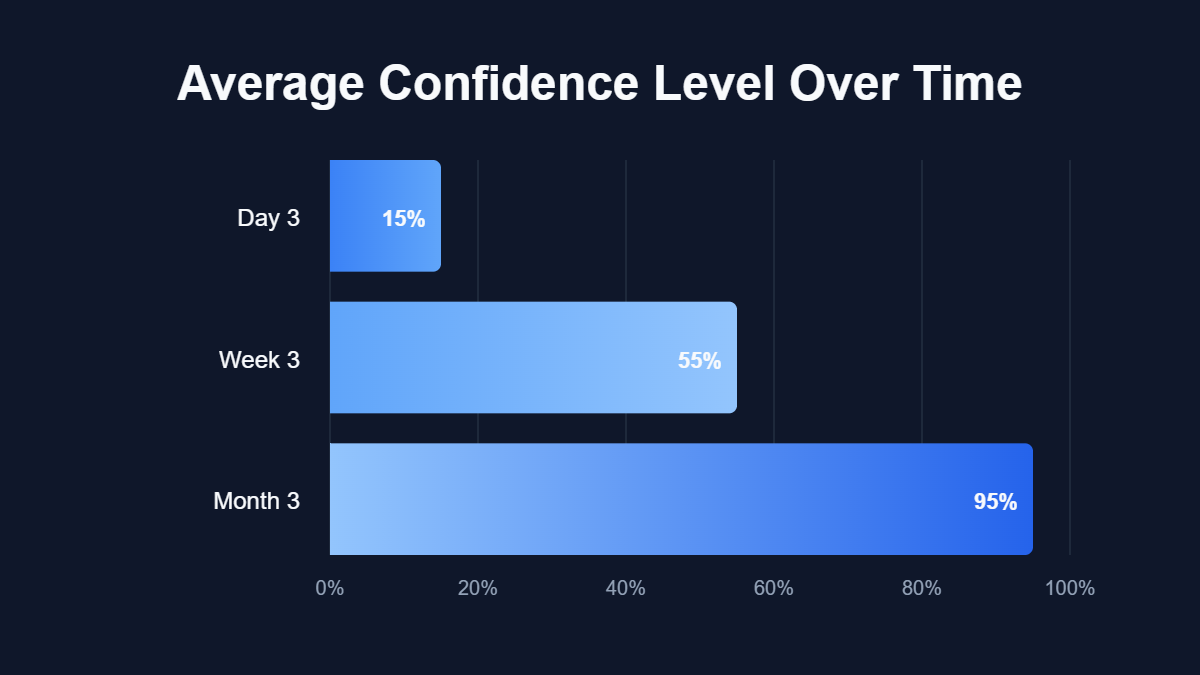
You have built a foundation of trust that is not going to break easily. I made a chart to show you how a typical cat confidence levels climb as they get used to your home.
My Take
The biggest jump happens between week three and month three, so do not give up if things feel slow early on.
Deepening the Social Bond
Now that they feel secure, you can actually start doing things. Training. Puzzle toys. Real play.
Their brain is not clouded by stress anymore, so they can actually learn. It is pretty cool to see.
You might notice they start grooming you. That is a big deal.
In the cat world, that is a sign of a very deep bond. They are saying you are part of their group.
You have officially been accepted. The main thing is to keep things steady.
Even though they are fine now, they still rely on that routine you built in the first few weeks. Do not get sloppy with it.
Preparing Your Home for Success
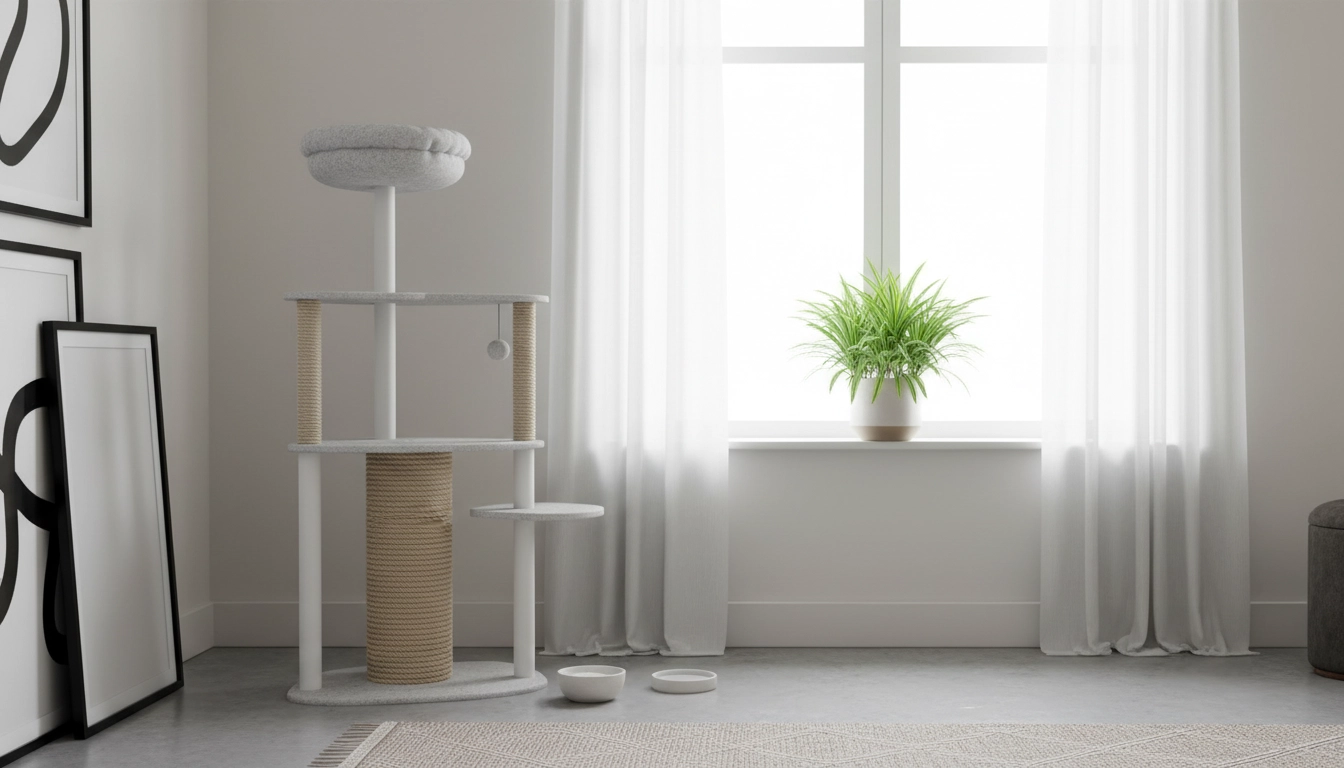
You should really have a sanctuary room set up before the cat even gets in the car. It does not have to be fancy.
A spare bedroom or even a large bathroom works. Just somewhere quiet. Low traffic.
Give them some vertical space. Cats love being high up.
A cat tree or even a cleared-off shelf makes them feel like they have the tactical advantage. They can see everything without being touched.
I’ve listed the essential items you need to have ready in that sanctuary room to make the transition smoother.
| Item Category | Specific Requirement | Why It Matters |
|---|---|---|
| Vertical Space | Cat tree or tall shelf | Provides a safe vantage point |
| Hiding Spots | Cardboard box or tunnel | Allows for immediate retreat |
| Resources | Food and water away from litter | Mimics natural hygiene habits |
| Pheromones | Diffusers or sprays | Mimics natural calming scents |
My Take
Setting this up beforehand prevents you from making scary noises while the cat is already trying to hide.
Check for weird stuff they could choke on. Or toxic plants. Lilies are a big no-no.
A safe environment means they do not have any bad experiences that might reset their internal clock. One scary accident can set you back weeks.