Bringing a pet bird into your home is like adding a splash of color and a symphony of sound to your daily life. Whether you are captivated by the brilliant plumage of a Macaw or the gentle chirping of a Budgie, birds make for incredibly intelligent and interactive companions.
However, birds are far more complex than many people realize. They aren’t just “living ornaments” that stay in a cage; they are social, sensitive, and long-lived creatures that require specific care to thrive. In this guide, we’ll walk you through everything you need to know to become a confident bird parent.
Basic Information: Understanding Your Feathered Friend
Before you head to the pet store or a rescue, it is vital to understand that “birds” are a diverse group. A Canary has very different needs compared to an African Grey Parrot.
Lifespan and Commitment
One of the most surprising facts for beginners is how long birds live. While a small bird like a Finch may live 5 to 10 years, larger parrots can live 50 to 80 years. Adopting a bird is often a lifelong commitment that may even require planning for their care in your will.
Social Intelligence
Birds are highly social. In the wild, they live in flocks and rarely spend time alone. In your home, you become their flock. They require significant daily interaction to prevent boredom and depression.
Unique Anatomy
Birds have a unique respiratory system that is incredibly efficient but also very delicate. They are highly sensitive to airborne toxins, which means your lifestyle (and your kitchenware) might need an upgrade before they arrive.
Care Guide: Creating the Perfect Living Environment
Your bird’s cage is their sanctuary, but it shouldn’t be their entire world. Here is how to set up an environment that promotes physical and mental well-being.
Choosing the Right Cage
The “bigger is better” rule always applies to bird cages. At a minimum, your bird should be able to fully extend and flap its wings without touching the sides.
- Bar Spacing: Ensure the bars are close enough together that your bird cannot get its head stuck.
- Material: Opt for stainless steel or powder-coated cages. Avoid lead or zinc, which are toxic.
Location Matters
Place the cage in a room where the family spends time, but away from the kitchen.
- Avoid Drafts: Keep them away from AC vents and drafty windows.
- Natural Light: Birds benefit from sunlight, but never place a cage in direct, unfiltered sun all day, as they can overheat.
Enrichment and Perches
Don’t just use the smooth dowel perches that come with the cage.
- Varying Textures: Use natural wood branches of different diameters to prevent foot problems like bumblefoot.
- Mental Stimulation: Rotate toys weekly. Birds love foraging toys, bells, and things they can safely shred (like raffia or untreated paper).
Feeding Tips: Beyond the Seed Bag
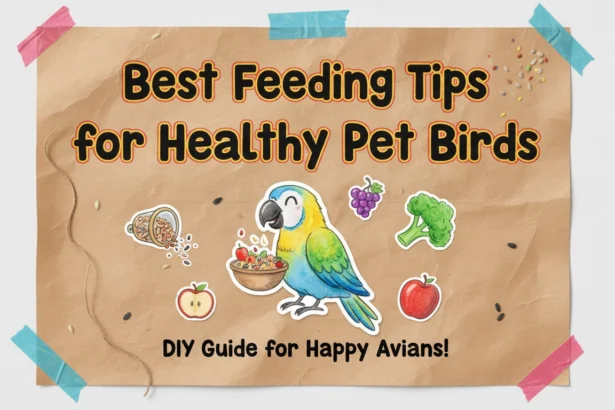
A common misconception is that birds can live on seeds alone. In reality, an all-seed diet is like a human living on candy—it’s high in fat and low in essential nutrients.
The Balanced Bird Plate
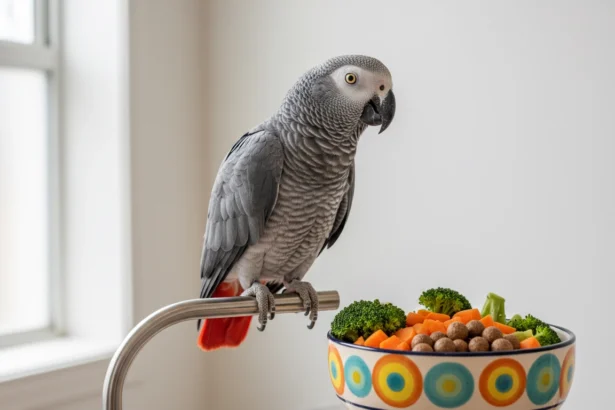
Most avian veterinarians recommend a diet consisting of:
- High-Quality Pellets (60-70%): These are formulated to provide a balanced nutritional profile.
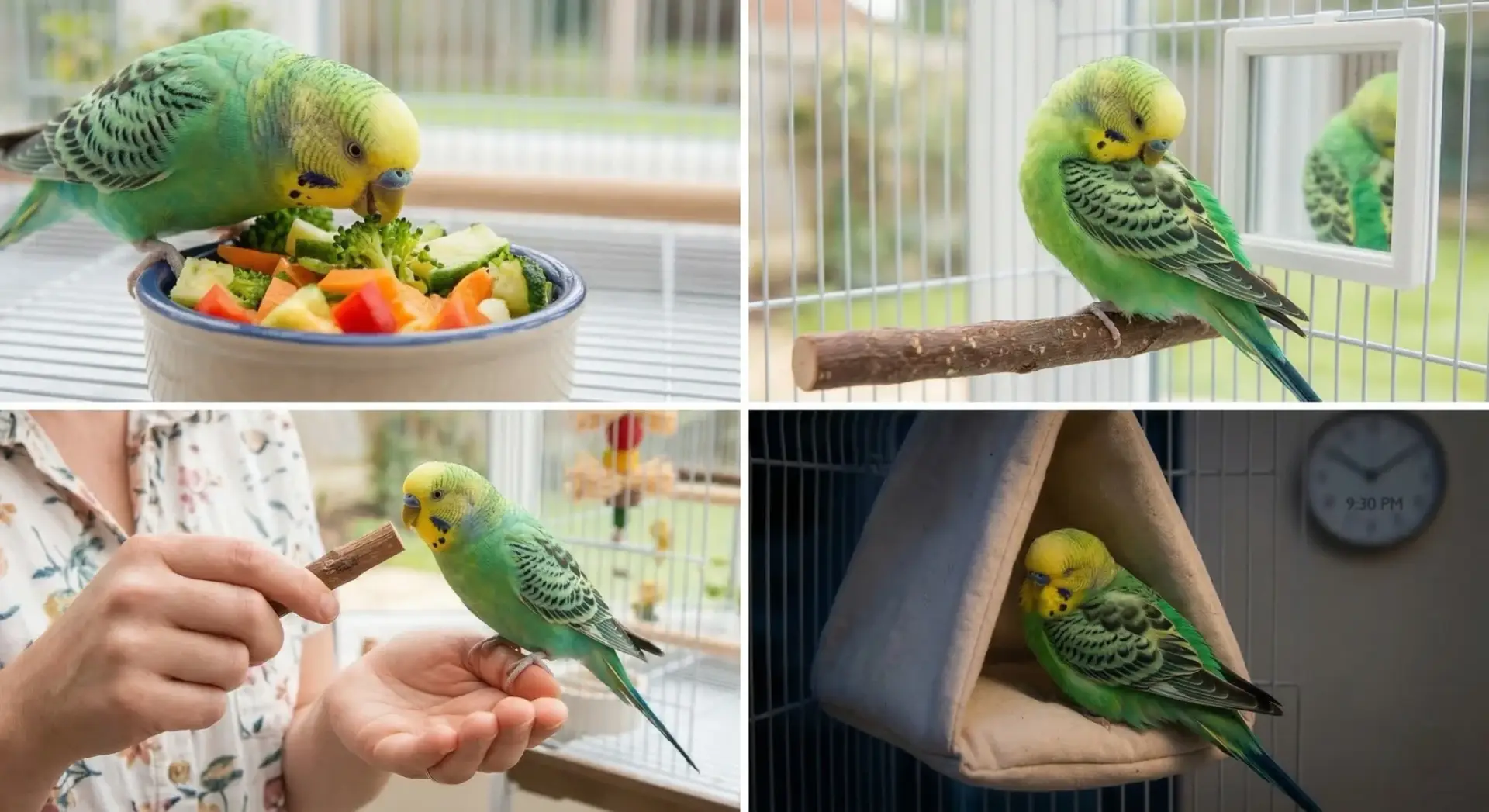
- Fresh Vegetables (20-25%): Leafy greens, carrots, broccoli, and bell peppers are favorites.
- Fruits (5%): Treat fruits like apples (no seeds), berries, and melon as occasional snacks due to their sugar content.
- Seeds and Nuts: Use these primarily as rewards for training or occasional treats.
Foods to Avoid (Toxic)
Some common “human foods” are lethal to birds. Never feed your bird:
- Chocolate
- Avocado
- Caffeine
- Onions and Garlic
- Fruit pits or Apple seeds (which contain trace amounts of cyanide)
- Alcohol or salty snacks
Fresh Water
Birds are messy! They often dunk their food in their water. Change the water at least twice a day and scrub the bowl daily to prevent bacterial growth.
Health and Common Problems: Prevention is Key
Birds are masters of disguise. In the wild, showing weakness makes them a target for predators, so they will hide symptoms of illness until they are quite sick.
Signs of a Sick Bird
Keep a close eye on your bird’s “normal” behavior. Contact an avian vet if you notice:
- Fluffed up feathers for long periods.
- Changes in droppings (color or consistency).
- Sitting on the bottom of the cage.
- Discharge from the nose (nares) or eyes.
- Tail bobbing (a sign of labored breathing).
Common Health Issues
- Psittacosis (Parrot Fever): A bacterial infection that can be transmitted to humans.
- Egg Binding: When a female bird cannot pass an egg; this is a medical emergency.
- Feather Plucking: Often caused by stress, boredom, or skin irritation.
- Respiratory Distress: Often caused by scents (candles, perfume) or overheated Teflon pans.
Annual Check-ups
Find a specialized avian veterinarian. General cat-and-dog vets may not have the expertise or equipment needed to treat delicate bird anatomy.
Training and Behavior Tips
A well-trained bird is a happy bird. Training builds trust and provides the mental exercise these intelligent animals crave.
The “Step Up” Command
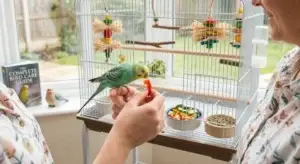
This is the most fundamental skill. Use a treat to lure your bird onto your finger or a perch while saying “Step up.” This makes moving the bird in and out of the cage stress-free.
Understanding Body Language
- Pinning Eyes: If a bird’s pupils are rapidly dilating and contracting, they are excited or aggressive. Proceed with caution!
- Beak Grinding: This is a sign of a relaxed, sleepy bird.
- Cresting: Birds like Cockatiels raise their crest when startled or curious.
Positive Reinforcement
Never hit or yell at a bird. They do not understand punishment; it only teaches them to fear you. Instead, ignore bad behavior and lavishly reward good behavior with praise and their favorite treats (like a piece of spray millet).
Helpful Tips for Pet Owners
The “Teflon” Danger
This is the most important safety tip for bird owners: Non-stick cookware (PTFE/Teflon) can kill a bird in minutes. When overheated, these pans release odorless fumes that are toxic to a bird’s lungs. Switch to stainless steel, ceramic, or cast iron.
Common Mistakes to Avoid
- Sleeping Habits: Birds need 10–12 hours of dark, quiet sleep. Use a cage cover if your house is active late at night.
- Clipping Wings: While a personal choice, many owners prefer to keep birds “flighted” for exercise. If you do clip, have a professional show you how to avoid cutting a “blood feather.”
- Scented Products: Ban incense, scented candles, and harsh cleaning chemicals from the room where your bird lives.
Quick Tips for Success
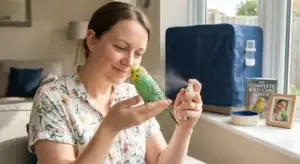
- Bath Time: Offer a shallow dish of water or a gentle misting from a spray bottle 2-3 times a week.
- Foraging: Hide treats inside cardboard rolls to mimic natural wild behaviors.
- Mirror Warning: While small birds like Budgies enjoy mirrors, they can sometimes become obsessively attached to the “other bird,” leading to aggression.
Conclusion
Taking care of a pet bird is a deeply rewarding experience that requires a blend of patience, education, and love. By providing a spacious home, a varied diet beyond seeds, and plenty of social interaction, you’ll ensure your feathered companion lives a long and vibrant life. Remember, you aren’t just keeping a pet; you are building a friendship with one of nature’s most intelligent creatures.
Frequently Asked Questions (FAQ)
1. How often should I clean my bird’s cage?
You should change the cage liner (newspaper or paper towels) daily. Food and water bowls must be washed daily. A deep scrub of the entire cage and perches should happen once a week.
2. Can I keep a single bird, or do they need a partner?
It depends on the species. Finches and Lovebirds often do better in pairs. However, many parrots do well as “single” birds provided you spend several hours a day interacting with them.
3. Why is my bird biting me?
Biting is usually a form of communication. The bird might be scared, protecting its territory (the cage), or hormonal. Observe what happens right before the bite to identify the trigger.
4. Do birds need to go to the vet if they aren’t sick?
Yes! An annual wellness exam is crucial. Because birds hide illness so well, a vet can often spot subtle changes in weight or feather quality before a problem becomes life-threatening.
5. How long do pet birds sleep?
Most pet birds require 10 to 12 hours of uninterrupted sleep in a dark, quiet environment to maintain a healthy immune system and stable mood.