

Welcome to PetlyInfo.com! We are so glad you’re here. As a dedicated pet parent, you want the absolute best for your furry companion, and that all starts with what’s in their bowl. Today, we’re diving into a crucial topic for millions of cat owners: best cat food for indoor cats.
If your feline friend spends 100% of their time inside, they are living a very different life than their wild ancestors—or even their outdoor-roaming counterparts. This means their dietary needs are also very different. Finding the right nutrition is one of the single most impactful things you can do to ensure your indoor cat lives a long, healthy, and vibrant life.
In this comprehensive guide, we’re going to break down exactly what to look for, why it matters, and provide our top picks to help you make the best decision for your specific cat. Let’s get started on the path to perfect nutrition!
Why Indoor Cats Need Specialized Food
First things first: why does “indoor formula” even exist? It’s not just marketing. Keeping a cat indoors is the safest choice for their health and the local environment, but it does fundamentally change their biology and lifestyle.
The main difference is their activity level. A cat who only roams a few rooms or a multi-story home is getting significantly less exercise than one patrolling a neighborhood, hunting, and escaping predators. Because they burn fewer calories, they are at a much higher risk of obesity. Obesity in cats isn’t just cosmetic; it leads to serious health issues like diabetes, arthritis, and heart disease. Indoor cat food is typically lower in calories and fat to combat this.
Furthermore, because they are inside all the time, they are groomers by nature and don’t have as many external stimuli. This can lead to increased hairball formation. Many indoor-specific foods have added fiber or special ingredients to help ingested fur pass through their system more easily.
What to Look for in the Best Cat Food for Indoor Cats
When you’re scanning the countless bags and cans in the pet aisle, you might feel overwhelmed. Ignore the pretty pictures and flip the package over. The real story is always in the ingredients and the nutrition label. Here are the non-negotiables:
1. High-Quality Protein as the First Ingredient
Cats are obligate carnivores. This is the most important concept in cat nutrition. “Obligate” means they must, and “carnivore” means they eat meat. Their bodies are built to efficiently process animal protein for energy and amino acids. Look for a specific animal source like “chicken,” “salmon,” or “beef” listed first. Avoid generic “meat by-products” as the primary source whenever possible, especially in premium foods.
2. Balanced Calorie Content
As we mentioned, a slightly reduced calorie count is standard for indoor food. However, “lower calorie” shouldn’t mean “lower quality.” The goal is nutrition density. You want them to get all their essential vitamins and minerals without an excess of empty energy.
3. Hairball Control & Healthy Digestion
Look for a moderate level of fiber. Natural fibers like beet pulp or cellulose can help moves fur through the digestive tract. The best cat food for indoor cats will also contain prebiotics or probiotics to support a healthy gut microbiome, which is essential for proper digestion and a strong immune system.
4. Essential Amino Acids (Like Taurine)
Your cat’s food must contain essential amino acids, particularly Taurine. Unlike humans or dogs, cats cannot synthesize enough Taurine on their own. Deficiencies are extremely dangerous and can lead to irreversible heart failure and blindness. Any food labeled as “complete and balanced” for cats will contain it, but it’s always worth checking.

Wet Food vs. Dry Food: Which is Better for Your Indoor Cat?
This is one of the most debated topics among pet owners. The truth is, both have pros and cons, and often a mixed feeding approach is the ideal solution. Let’s break it down:
The Case for Wet (Canned) Cat Food
- Hydration: This is the #1 benefit. Wet food is often over 75% water. Cats are descended from desert animals and have a low thirst drive. Getting their moisture from their food mimics their natural diet and significantly reduces the risk of urinary tract and kidney issues.
- Lower Calories/Carbs: Generally, wet food has a higher percentage of protein and fat and fewer carbohydrates per serving compared to dry food, making it less likely to contribute to weight gain.
- High Palatability: Many cats find the texture and smell of wet food more appealing, making it a great choice for picky eaters.
The Case for Dry (Kibble) Cat Food
- Convenience and Cost: Kibble is easier to store, doesn’t smell, can be left out (within reason), and is almost always less expensive per serving.
- Dental Health (with a caveat): While some believe it helps “scrape” teeth, many veterinary dentists disagree, as the kibble shatters too quickly. However, specific “dental care” kibble is designed to be larger and encourages chewing to reduce plaque.
A Practical Tip: Try the Mixed Diet
For most indoor cats, a combination is best. Try offering wet food for breakfast and dinner to provide hydration and a higher-protein meal, and a measured portion of high-quality dry food during the day for snacking (or in a puzzle feeder!). This way, you get the benefits of both.
5 Practical Tips for Feeding and Caring for Your Indoor Cat
Nutrition is the foundation, but a holistic approach to care makes the biggest difference.
- Measure, Don’t Free-Feed: Obesity is the biggest threat. Ignore the vague “1-2 cups” on the bag. Use a digital kitchen scale for perfect accuracy. Start with the low end of the recommended range and adjust up or down based on your cat’s body condition.
- Make Them Work for It: Indoor cats get bored, and they don’t hunt. Replace their food bowl with a puzzle feeder. This forces them to use their brains and bodies to get their food, which burns calories and provides essential mental stimulation.
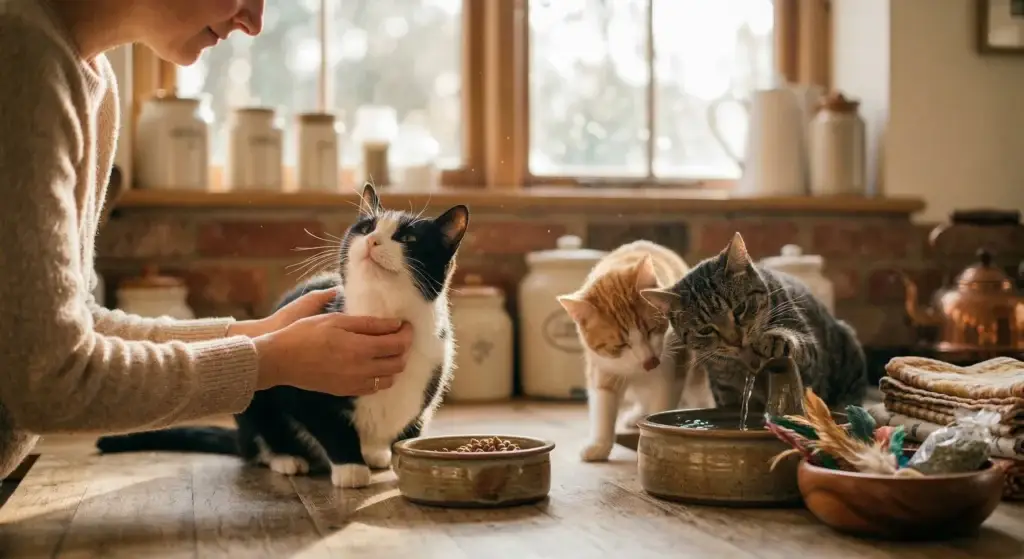
- Encourage Hydration Everywhere: Cats don’t drink enough. Place multiple fresh water bowls throughout your home (not right next to their litter box or food bowl). Consider a pet water fountain, as many cats are more likely to drink from a moving water source.
- Scheduled Playtime is a Must: You are their gym! Dedicate at least 10-15 minutes twice a day to play with an interactive toy like a wand or laser pointer. Mimic hunting behavior to get their instincts going.
- Focus on Life Stage: Ensure you are feeding for their current age. Kittens need very different, high-calorie, growth-focused food, while seniors need support for their joints and organ function. Transition to “Adult Indoor” around 12-18 months.
Conclusion: A Healthy Diet, a Happy Cat
Choosing the best cat food for indoor cats doesn’t have to be a source of stress. By focusing on real meat protein, appropriate calorie levels, and high-quality ingredients with a purpose (like fiber for hairballs), you are already on the right path.
Remember, every cat is an individual. What works for your friend’s cat might not be a hit with yours. Be patient, don’t be afraid to try high-quality samples, and most importantly, consult your veterinarian. They can help assess your cat’s body condition and recommend the perfect path.
By prioritizing a balanced diet and an enriching environment, you aren’t just giving them a good life—you’re giving them their best life.
Q: My indoor cat is a very picky eater. Any tips for getting them to try a new food? A: This is so common! Try a very gradual mix of the old and new food, starting with 90% old and 10% new, and slowly increase the new food over 1-2 weeks. You can also try adding a small amount of warm water or low-sodium tuna juice (water-packed, not oil-packed) to the new food to enhance the smell.
Q: Do I really need specific “indoor formula” cat food? A: While your cat can survive on other high-quality adult cat food, “indoor” formulas are specifically designed to address the most common challenges for indoor pets, which are weight management and hairball control. This makes them the easiest and most effective option.
Q: What is a “puzzle feeder” and are they hard to use? A: A puzzle feeder is a device where you put dry food, and the cat has to roll it, bat it, or manipulate it in some way to get the kibble to fall out. They are fantastic for adding activity and mental engagement to a cat’s day. They come in varying difficulty levels, so you can start with an easy one and work your way up.